Table of Contents
Taghazout Surf Beaches: A Day on the Sand and Waves
The stretch of coast between Taghazout and Tamraght is easy to love and easy to misjudge. From the road it looks like one long beach with some rocks, a few umbrellas and a lot of people carrying boards. Spend a full day on it, though, and you start to see that the Taghazout surf beaches are very different from one another: a sandy town beach where schools teach beginners, a rock reef that breaks further out, a cliff-top car park that doubles as the best viewing platform on the coast. This guide follows one day of walking that coast with a camera, and uses it to explain how the Taghazout surf beaches work, which ones suit which level, and how to enjoy a beach day without damaging the place.
We write as surfers and visitors, not as a tourist office, so we keep two kinds of information apart. What we describe from our own photos is first-hand. Everything else is general guidance, and where it comes from a published source, we link to that source so you can check it yourself.
Why the Taghazout surf beaches draw so many visitors
A village, a coastline and a reputation
According to Wikipedia’s Taghazout article, Taghazout is a small Berber fishing village on Morocco’s Atlantic coast, roughly 19 km north of Agadir. The same article says the waves work best between September and April and that Morocco’s long right-hand points are known for being consistent and relatively uncrowded. It also notes that several beaches around the village suit surfers of every level, which is the main reason the area became so popular with surf schools and travelling surfers.
One coast, many different beaches
The phrase Taghazout surf beaches covers a lot of ground. In its guide to the beaches around Taghazout, the Surf Atlas describes a sandy town beach that is mostly for beginners, a long open beach at Tamraght with many surf schools, a quieter point-style setup at La Source, and Anchor Point, a rock-shelf right-hander it describes as for advanced surfers only. Understanding that spread is the key to choosing well, because the same swell that gives a beginner a gentle foam ride can turn a rocky reef into something much more serious.
What a beach day looks like along the coast
The photos in this article come from a day spent walking the coast between Taghazout and Tamraght. We were not trying to surf every spot, only to see how the beaches are used. Here is what stood out.
Umbrellas, loungers and the long view
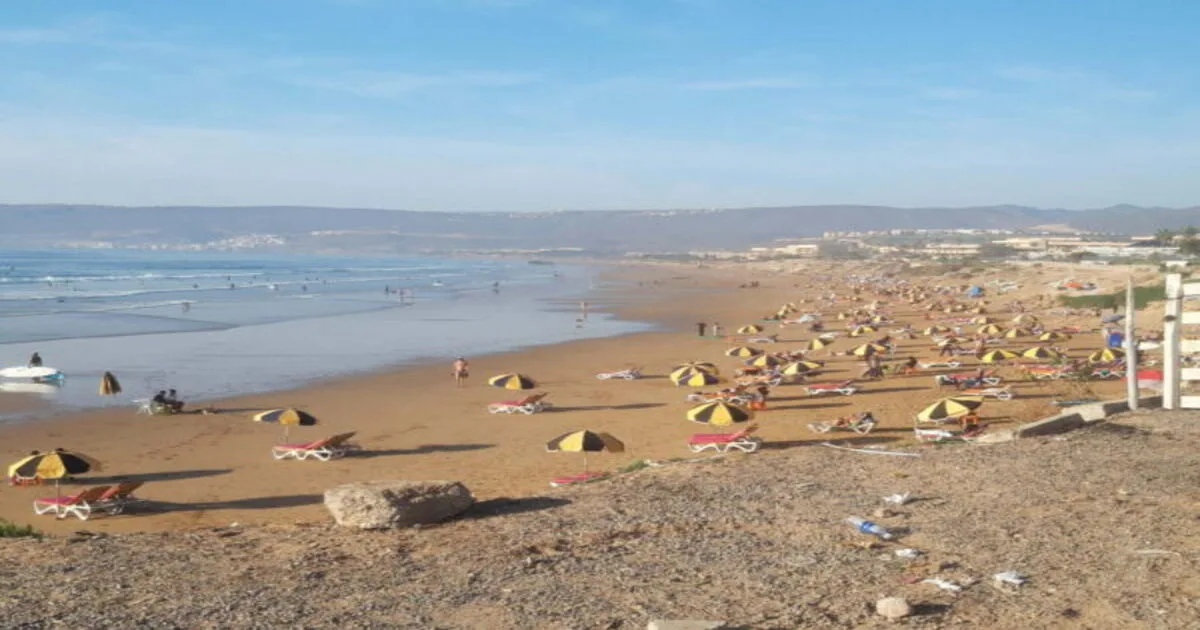
The first thing you notice on some of the busier beaches is the lines of yellow and black umbrellas. They are set out on the sand above the waterline, with loungers underneath, and from a distance they make the beach look like a single organised strip. If you are not a surfer, this is the comfortable side of Taghazout surf safety: shade, a place to sit and a view of the waves without getting wet.
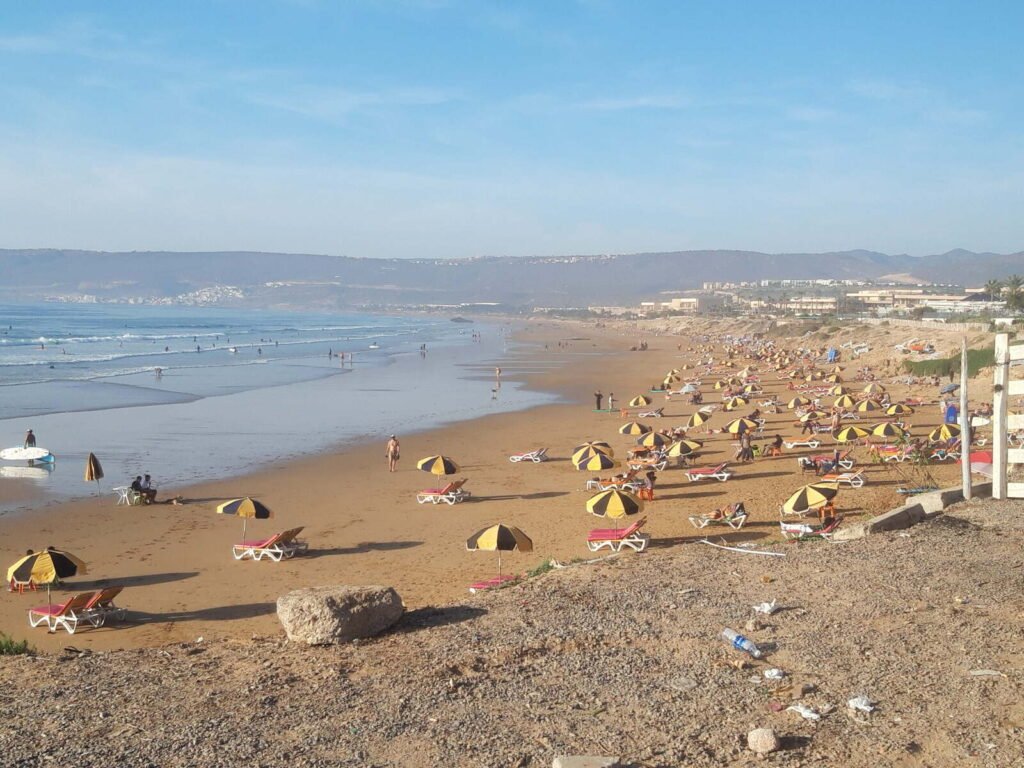
If you do surf, the umbrellas matter for another reason. They mark where people sit, which is also where you will be walking past with a board. Carry your board on the side away from people, and watch for children who run across the sand without looking.
A tidal pool below the gravel path
From a gravel path above one of the beaches, es we could see umbrellas and loungers below, with a tidal pool near the water and waves rolling in behind it. A tidal pool is a useful thing on a coast like this. It gives families and less confident swimmers a calmer place to cool off while the sea beyond keeps working. It is also a reminder that the sea changes with the tide: the same patch of sand can be dry and wide at one hour and mostly covered at another.
A reef break at low tide
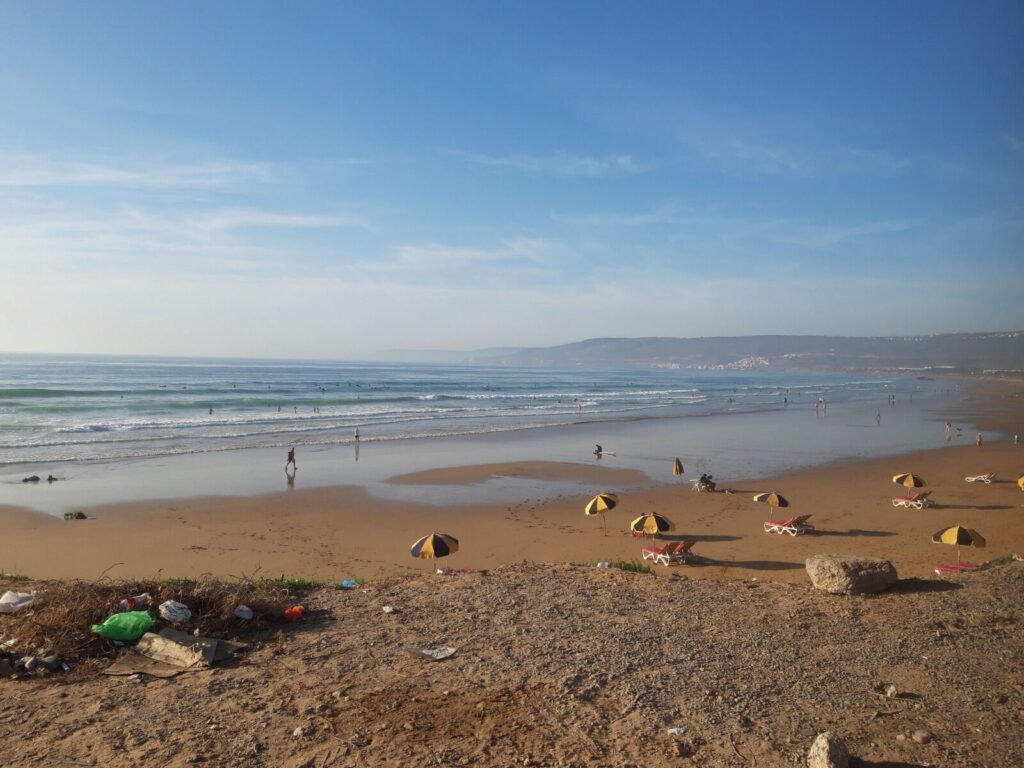
Further along the coast we found a rock reef with waves breaking over it and a few surfers waiting well out. This is a different kind of beach day altogether. The take-off is further from the shore, the bottom is rock, and the exit can be awkward if you misjudge it. Watching from the cliff is the right way to start: you can see where people paddle out, where they take off,ff and where they come in before you decide whether the spot is for you.
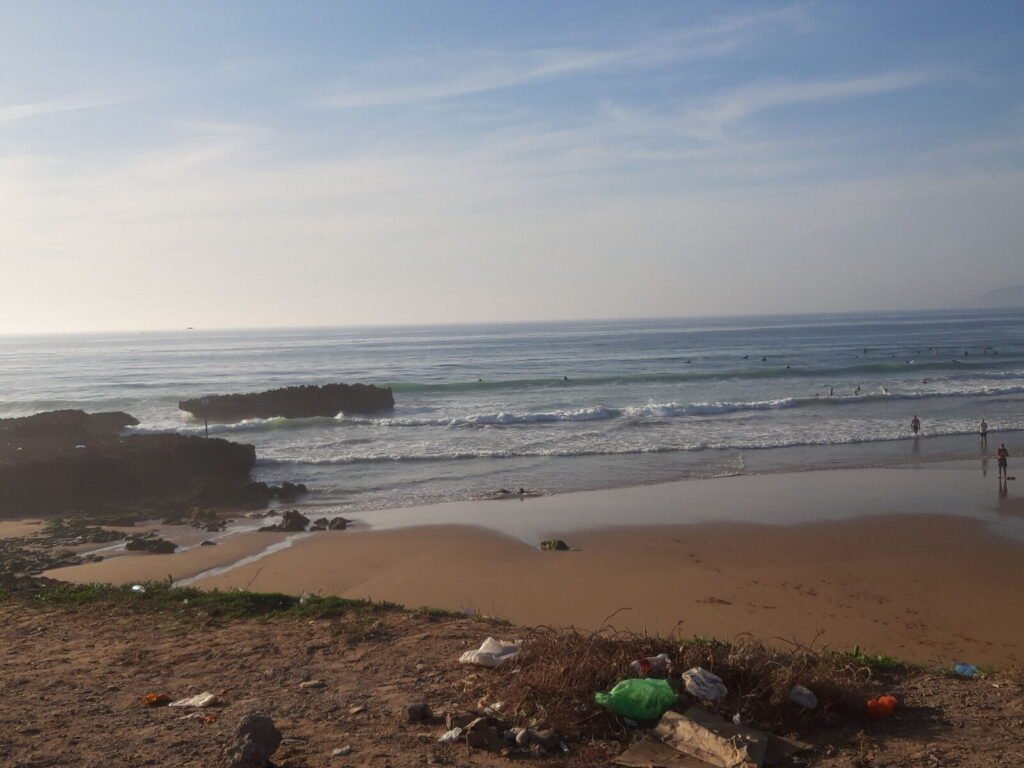
In the foreground of this photo, there is litter on the cliff top. We are including it on purpose, because pretending the coast is spotless would not help anyone. Plastic and other rubbish collect at viewpoints and car parks, and wind carries it down to the rocks and the water. We say more about this below.
The cliff-top view over a small surf break
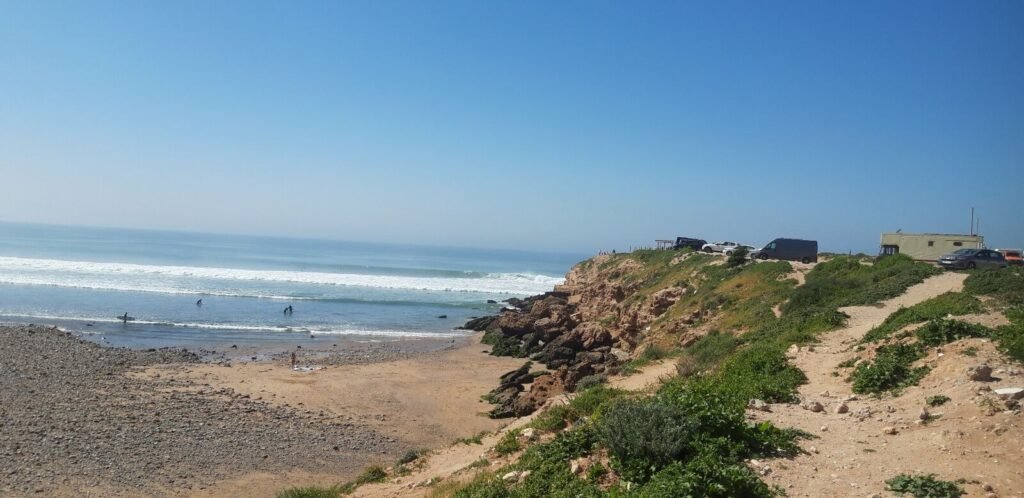
One of the best places to understand the Taghazout surf beaches is a cliff-top parking area above a surf break. From there you can look down on a small pebble beach, a rocky headland and waves rolling in one after another. You can count the surfers, see how the sets arrive and judge the size of the waves against the people in the water. It costs nothing, and it teaches you more about a break than any description can.
Choosing a beach for your level
Because the Taghazout surf beaches differ so much, the single most useful decision you make is which one to paddle out at. The following is general guidance based on the sources we have linked, not a substitute for a local surf school or a lifeguard’s advice.
Beginners
The Surf Atlas describes the town beach at Taghazout Beach Day as sandy and mostly for beginners, and Tamraght Beach as a long, open, sand-bottomed beach with plenty of surf schools. Sand is more forgiving than rock when you fall, and the presence of schools means there are instructors nearby. Choose a small day, stay where the whitewash is soft, and ask a school about the tide before you start.
Intermediate surfers
If you can already paddle into green waves and turn, the Surf Atlas points to Imourane, near Devil’s Rock, as a beginner-to-intermediate spot, and Banana Point as a mellow right over reef that suits longboards in small surf. Both can change quickly when the swell rises, and the Surf Atlas warns that stronger swell can bring rips at Banana Point, so check the forecast and talk to someone local before you go.
Advanced surfers
Anchor Point is the name most people know. The Surf Atlas calls it one of Africa’s most celebrated rights, breaking over a rock shelf and reef, and says it is for advanced surfers only. Wikipedia places Anchor Point about 3 km from the village. If you are not sure whether you are ready, you probably are not: watch from the shore first, and choose a gentler spot until you are certain.
Reading the sea before you go in
Tide, swell and wind
The waves on this coast depend on three things: the size and direction of the swell, the tide and the wind. A beach that is perfect at mid tide can be unusable at low tide when rocks appear, and a sheltered spot can turn messy when the wind swings round. The Surf Atlas notes that some beaches stay cleaner when a north wind affects more open ones, which is a good example of why local knowledge matters. Check a forecast the evening before, look at the sea in person in the morning, ng and ask someone who surfs there every day.
Rip currents
Rips are a risk on any open Atlantic beach, and the Surf Atlas mentions them at some of the Taghazout surf spots when the swell is bigger. The U.S. National Weather Service explains in its rip current survival advice that you should stay calm, avoid swimming against the current, swim parallel to the shore until you are free of the pull, ll and then angle back towards the beach. If you cannot reach the shore, face it and call or wave for help. A surfboard helps you float, but only if you stay with it.
Rocks and reefs
On a reef or a rock shelf, a fall is more serious than on sand. Wear a leash you trust, learn how to fall flat and away from the board, and know where the exit is before you paddle out. If the tide is dropping, remember that the reef gets shallower while you are in the water.
Beach etiquette and respect for the coast
Sharing the water
The basic rules are the same everywhere. The surfer closest to the peak has priority, you do not drop in on someone already riding, and you paddle around the wave, not through the line-up. On the more crowded Taghazout surf beaches, with schools and visitors in the same water, patience and a smile go further than any argument.
Respecting local life
Taghazout is a working village as well as a surf destination. Dress modestly when you walk through town, greet people and ask before photographing anyone. Cafés, shops and surf schools all depend on visitors, but they also depend on respect from them.
Looking after the beach
The litter in our reef photo is not unusual, and it will not be fixed by one article. What visitors can do is simple: take your own rubbish with you, carry a spare bag, ag and pick up a few pieces whenever you pass a bin that is full or missing. Avoid single-use plastic where you can. Clean cliffs and clean sand are better for surfers, families, wildlife and the people who live here.
Planning your day on the Taghazout surf beaches
Morning, midday and evening
Mornings are usually the best time to surf, because the wind tends to be lighter. Midday is the time for shade and a long lunch under an umbrella, and the late afternoon is when the light turns so soft, and the beach empties a little. Plan a walk along the sand or a viewpoint stop at the end of the day, and do not forget water and sunscreen.
What to bring
- A sun hat, sunglasses and high-factor sunscreen, because the Atlantic sun is strong even on cooler days.
- A reusable water bottle and a small bag for your rubbish.
- A towel and a dry layer for after the session.
- Shoes you can walk in over gravel and rocks, not only flip-flops.
- A leash, wax and a rash vest or wetsuit suited to the season, if you bring your own gear.
Combining a beach day with the rest of your trip
A surf morning followed by an afternoon on the sand and a sunset walk makes a satisfying day. If you want something quieter in the evening, read our guide to beach horse riding in Taghazout, where we describe what riders and surfers share on the same shore. For a broader plan, our articles on the best surf spots in Morocco and learning to surf in Morocco will help you choose where to go next, and our overview of Morocco’s Atlantic coast gives the wider picture. To plan the water side of the day, read our guide to surfing in Taghazout Bay. If the swell is large, our piece on high surf warnings explains what the warnings mean before you decide to paddle out.
Frequently asked questions about the Taghazout surf beaches
Which of the Taghazout surf beaches is best for beginners?
The Surf Atlas describes the town beach at Taghazout and the long beach at Tamraght as the most beginner-friendly, because both have sandy bottoms and many surf schools. Always ask an instructor about the tide and the current conditions on the day.
When is the best time to visit the Taghazout surf beaches?
Wikipedia says the waves work best from September to April. Within that window, the size and direction of the swell change from day to day, so check a forecast and talk to local surfers before you go.
Is Anchor Point suitable for intermediate surfers?
The Surf Atlas says Anchor Point is for advanced surfers only. If you are an intermediate surfer, watch from the shore, build your experience on gentler beaches and ask a local coach before you try it.
Are the Taghazout surf beaches safe for swimming?
That depends on the beach, the tide and the swell. Some beaches have lifeguard towers and tidal pools, while others have rocks and rip currents when the swell grows. Read the conditions, swim near a lifeguard where possible, le and follow the National Weather Service advice if you are caught in a rip.
Can I rent a board and take a lesson on the coast?
Yes, the Surf Atlas mentions many surf schools on the town beach and at Tamraght. We do not quote prices, because they vary by season and school. Ask what the lesson includes, how many students are in each group, and what safety measures are used.
How can I help keep the Taghazout surf beaches clean?
Take your rubbish with you, carry a spare bag, avoid single-use plastic and pick up a few pieces when you can. Small habits repeated by many visitors make a noticeable difference.
Final thoughts on the Taghazout surf beaches
The Taghazout surf beaches offer something for almost everyone: soft sand for beginners, longer waves for intermediates, a famous point break for experts, ts and an umbrella-lined shore for everyone else. The best day combines all of it: learn the coast from a viewpoint, choose a break that matches your level, respect the sea and the people who share it, and leave the beach cleaner than you found it. If you have your own photos and stories from the coast, we would be glad to hear them through our contact page.