Surfing Devil’s Rock: Mastering the Powerful Atlantic Swells 5
Table of Contents
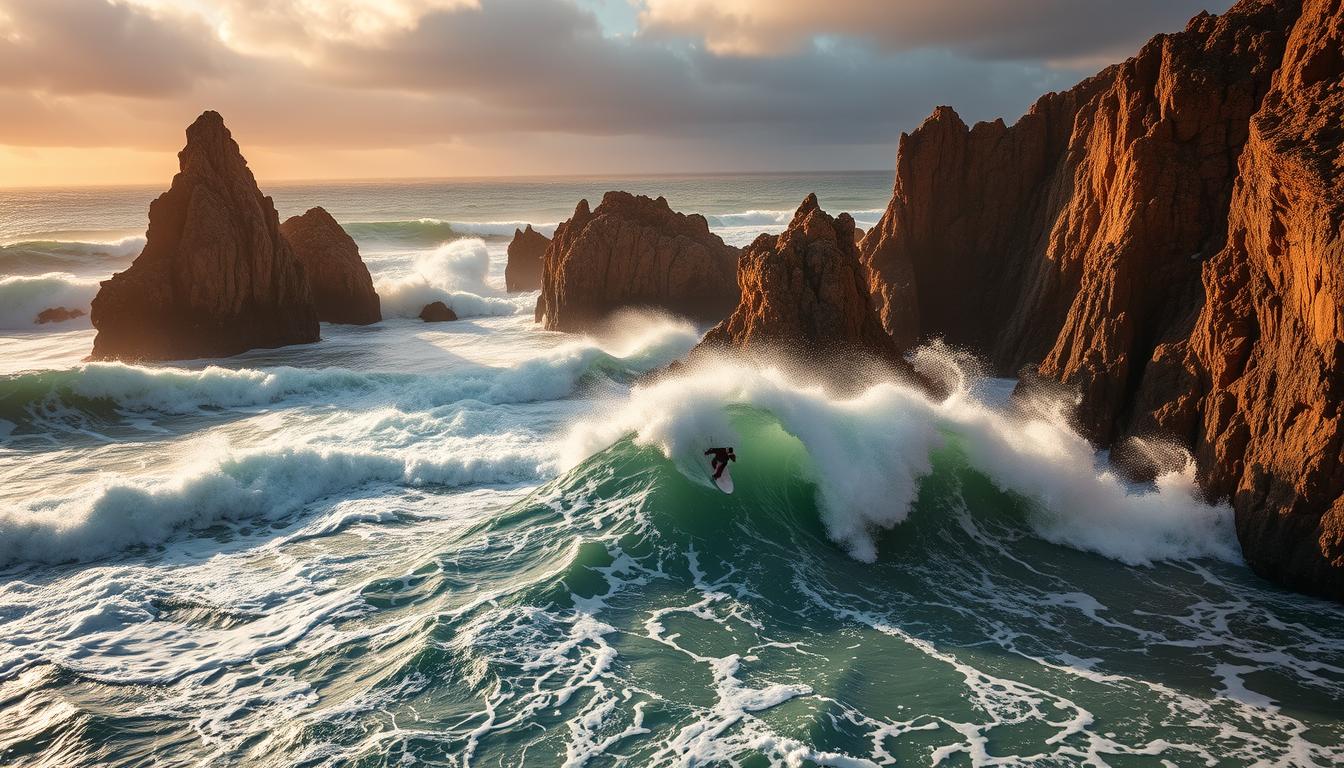
The ocean’s roar hit the jagged rocks, making me shiver. As a seasoned surfer, I’d heard many tales about Devil’s Rock. But nothing could get me ready for the waves’ raw power. Surfing Devil’s Rock is more than a sport; it’s a dance with nature’s most unpredictable force.
Surfing Devil’s Rock is not just a challenge; it shows a surfer’s skill and bravery. The rock’s shape makes waves that test even the most skilled riders. It promises an adrenaline rush unlike any other surfing experience.
Every wave here tells a story of power, precision, and intensity. Surfers from all over the world come to test their limits. They know Devil’s Rock demands respect and offers an unmatched surfing challenge.
Key Takeaways
- Devil’s Rock offers an extreme surfing experience for advanced riders
- Unique wave formations create extraordinary surfing challenges
- Requires exceptional skill and mental preparation
- A destination for serious surfers seeking ultimate thrills
- Demands complete respect for the ocean’s power
Understanding Devil’s Rock: A Surfer’s Paradise
Devil’s Rock is a top spot for surfers in Morocco. It’s located in Tamraght, a lively coastal area. This place draws surfers from everywhere who want a thrilling adventure.
Geographical Location and Wave Formation
Devil’s Rock is on Morocco’s Atlantic coast. Its unique landscape makes amazing waves. The rocky shores and underwater features create strong, steady waves for all skill levels.
- Total wave length: Approximately 300-360 feet
- Wave height: Ranges from 3-12 feet, depending on the season
- Bottom composition: Rocky with sandy patches
Best Seasons for Surfing
Knowing the seasons is key to planning your surf trip. Devil’s Rock changes with the seasons, offering different experiences for surfers.
| Season | Wave Conditions | Skill Level |
|---|---|---|
| Winter (October-March) | 6-12 feet swells | Advanced |
| Summer (April-September) | 2-6 feet swells | Beginner to Intermediate |
Local Weather Patterns
The weather around Devil’s Rock is special for surfing. Water temperatures range from 16 to 22°C all year. This makes it comfy for surfers with the right wetsuit.
- Winter water temperature: 16-18°C (wetsuit recommended)
- Summer water temperature: 18-22°C (lighter wetsuit or boardshorts)
- Average wind conditions: Moderate offshore winds
Devil’s Rock is a top spot for surfing in Morocco. It offers an unforgettable experience for surfers of all levels.
What It’s Like to Ride the Infamous Waves of Devil’s Rock
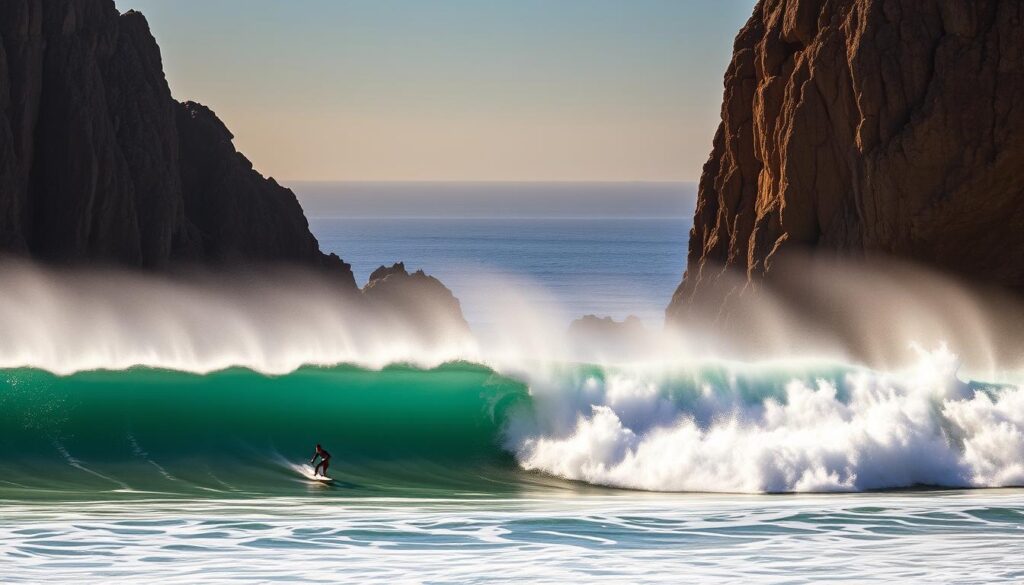
Surfing at Devil’s Rock is more than a sport. It’s a thrilling dance with nature that tests your limits. It demands all your skill and focus.
As you approach the waves, Surfing Devil’s Rock, you’ll feel a rush of adrenaline. The swells look like mountains, each one a challenge to your reflexes and courage. Experienced surfers say it’s a deep connection with the ocean.
- Wave heights can reach up to 15 feet
- Unpredictable current patterns
- Rocky underwater terrain increases difficulty
Your surfing at Devil’s Rock needs sharp focus. One wrong move can send you tumbling into the unforgiving breaks. You must prepare mentally and physically to survive.
“Devil’s Rock doesn’t just challenge your surfing—it transforms you,” says professional surfer Marcus Rodriguez.
| Skill Level | Wave Difficulty | Recommended Experience |
|---|---|---|
| Beginner | High Risk | Not Recommended |
| Intermediate | Extreme Challenge | Supervised Only |
| Advanced | Ultimate Test | Recommended |
Riding Devil’s Rock waves is more than just surfing. It’s about knowing your limits and respecting the ocean’s power.
Essential Equipment and Safety Gear for Devil’s Rock
Getting ready for surfing at Devil’s Rock means planning well and having the right gear. The tough waves need safety equipment and knowledge to stay safe and have fun.
Surfing Devil’s Rock here is not easy. You must be ready for anything and protect yourself from danger.
Recommended Surfboard Types
Choosing the right surfboard is key for Surfing Devil’s Rock. Here are some good options:
- Shortboard: Great for skilled surfers who want to ride big waves
- Gun Board: Made for huge and strong waves
- Hybrid Board: Good for those in between skill levels
Safety Equipment Checklist
Your safety is most important when surfing these waves. Make sure to bring these items:
- High-quality wetsuit
- Impact vest
- Surfboard leash
- Helmet
- First aid kit
- Communication device
Emergency Protocols
Knowing what to do in emergencies is crucial. Always:
- Tell local lifeguards where you’ll be surfing
- Check the weather before you go in
- Surf with a friend
- Know your own limits
“Preparation is the key to surviving and enjoying the most challenging Surfing Devil’s Rock.” – Professional Surf Instructor
Navigating the Rock’s Dangerous Zones
Surfing Devil’s Rock is not for beginners. It requires respect and knowledge of its dangers. Experienced surfers know that riding these waves is not just about skill. It’s about knowing the terrain well.
When you surf here, watch out for several hazards:
- Submerged rock formations that can suddenly emerge
- Unpredictable rip currents near rocky outcrops
- Sudden depth changes in Surfing Devil’s Rock
- Sharp underwater rock edges
Local surfers say it’s important to know the area before surfing. Understanding the tide patterns and rock formations is crucial for safe navigation.
| Danger Zone | Risk Level | Recommended Action |
|---|---|---|
| Northern Rock Cluster | High | Avoid during low tide |
| Southern Rip Current Area | Critical | Use extreme caution |
| Central Wave Break | Moderate | Best for experienced surfers |
Your safety is key. Always surf with a buddy and carry safety gear. Never underestimate the power of Devil’s Rock’s waves.
Advanced Techniques for Mastering Devil’s Rock Waves
Surfing Devil’s Rock is more than basic skills. It’s about understanding the connection between you and the waves. You need precision, knowledge, and strategy to enjoy the thrill.
Mastering these waves takes technical skill and intuition. Experienced surfers learn to read the ocean and move with purpose.
Reading Wave Patterns
To excel in surfing, you need to spot wave patterns. Here are key skills:
- Identify incoming wave sequences
- Recognize subtle water movement indicators
- Predict wave behavior before it forms
- Understand local current dynamics
Position and Timing Strategies
Success at Surfing Devil’s Rock comes from perfect positioning and timing. Your approach should be:
- Paddle with purpose and precision
- Maintain optimal board angle
- Learn to read wind and water conditions
- Practice quick directional changes
Common Mistakes to Avoid
Even pros can make mistakes. Stay vigilant and proactive to avoid them:
- Overcorrecting board position
- Misreading wave momentum
- Failing to adapt to changing conditions
- Neglecting personal energy levels
By learning and practicing these techniques, you’ll improve at Surfing Devil’s Rock. Challenging waves become thrilling adventures.
Local Surfing Culture and Etiquette
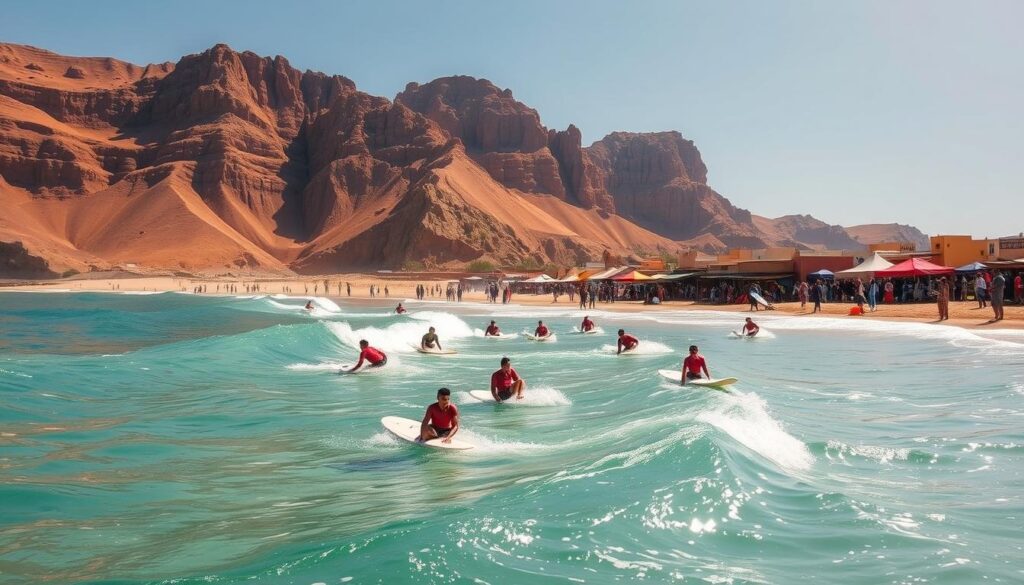
Exploring surfing in Morocco means diving into the local culture at Devil’s Rock. This place has a special surf community. It mixes Moroccan hospitality with a deep love for surfing.
Surfing Devil’s Rock etiquette here is all about respect and loving the ocean. Taghazout, Morocco’s top surf spot, welcomes surfers from around the world. It keeps local traditions alive.
- Respect local surfers and their unwritten rules
- Wait for your turn when catching waves
- Communicate and share the lineup courteously
- Learn basic Arabic or Berber greetings
Devil’s Rock draws surfers of all levels. Surf camps like Amayour Surf Hostel help bridge cultural gaps. They offer top-notch surfing experiences.
| Cultural Aspect | Visitor Expectations |
|---|---|
| Local Interaction | Friendly and welcoming |
| Wave Sharing | Cooperative and respectful |
| Language | Basic communication appreciated |
By understanding these cultural aspects, you’ll not only get better at Surfing Devil’s Rock. You’ll also make lasting connections in the Moroccan surf community.
“Surfing Devil’s Rock is more than a sport here; it’s a way of life that connects people across cultures.” – Local Surf Instructor
Weather Conditions and Best Times to Surf
Planning your surfing trip to Surfing Devil’s Rock? Knowing the local weather is key to catching the best waves. The area’s weather changes a lot, affecting the waves. So, timing your visit is crucial for a thrilling experience.
Winter, from December to February, is the best time for surfing here. Offshore winds make the waves strong and consistent. The water is cold, around 17°C, so you’ll need a full wetsuit.
Spring brings warmer water, up to 17.5°C, making it a good time to surf. The waves are more complex, requiring skill to surf them well. Experienced surfers will love the challenge and power of the waves.
Surfers say the best time to visit is from October to April. You’ll find the most exciting waves during these months. Always check the weather forecast and talk to local guides before surfing.