Guide to Devil’s Rock: The Ultimate Surf Guide to Morocco’s Most Amazing Beach Break (2026)
Table of Contents
Guide to Devil’s Rock: The Ultimate Surf Guide to Morocco’s Most Amazing Beach Break (2026)
Meta Title: Guide to Devil’s Rock (2026) | Taghazout’s Best All-Level Surf Spot
Meta Description: Your complete guide to Devil’s Rock in Taghazout, Morocco. Discover wave conditions, best time to surf, surf schools, accommodation & travel tips for 2026.
URL Slug: /guide-to-devils-rock-taghazout-morocco/
Guide to Devil’s Rock: Introduction
There’s a moment every surfer remembers — that first wave where everything clicks. For thousands who visit Morocco’s Atlantic coast each year, that moment happens here. Don’t let the intimidating name fool you. Unlike ferocious neighbors Killer Point and Anchor Point, this is Taghazout’s most welcoming wave.
Nestled on golden sand south of the Taghazout-Tamraght headland, this beach break has earned its reputation as Morocco’s go-to spot for all-level surfing. With a forgiving sandy bottom, consistent swell, and one of North Africa’s most beautiful settings, it’s no wonder this break anchors the Taghazout surf experience. Whether you’re planning your first Moroccan surf trip or you’re a seasoned charger looking for a mellow session, this is the only guide to Devil’s Rock you’ll ever need.
Guide to Devil’s Rock: Quick Facts
| Feature | Details |
|---|---|
| Wave Type | Beach break (sand bottom) |
| Direction | Right-hand, occasional lefts & A-frames |
| Skill Level | All levels |
| Best Tide | Mid tide |
| Best Swell | Northwest (NW) |
| Best Wind | Offshore easterlies (E/NE) |
| Wave Height | 2–6+ ft typical, up to 10 ft |
| Location | 7 km south of Taghazout, near Tamraght |
| Water Temp | 16–18°C winter / 20–23°C summer |
| Wetsuit | 4/3mm winter, 3/2mm or shorty summer |
| Crowds | Moderate — busiest during surf camp hours |
| Hazards | Minimal — soft sand, occasional rocks at low tide |
Guide to Devil’s Rock: Location & Access
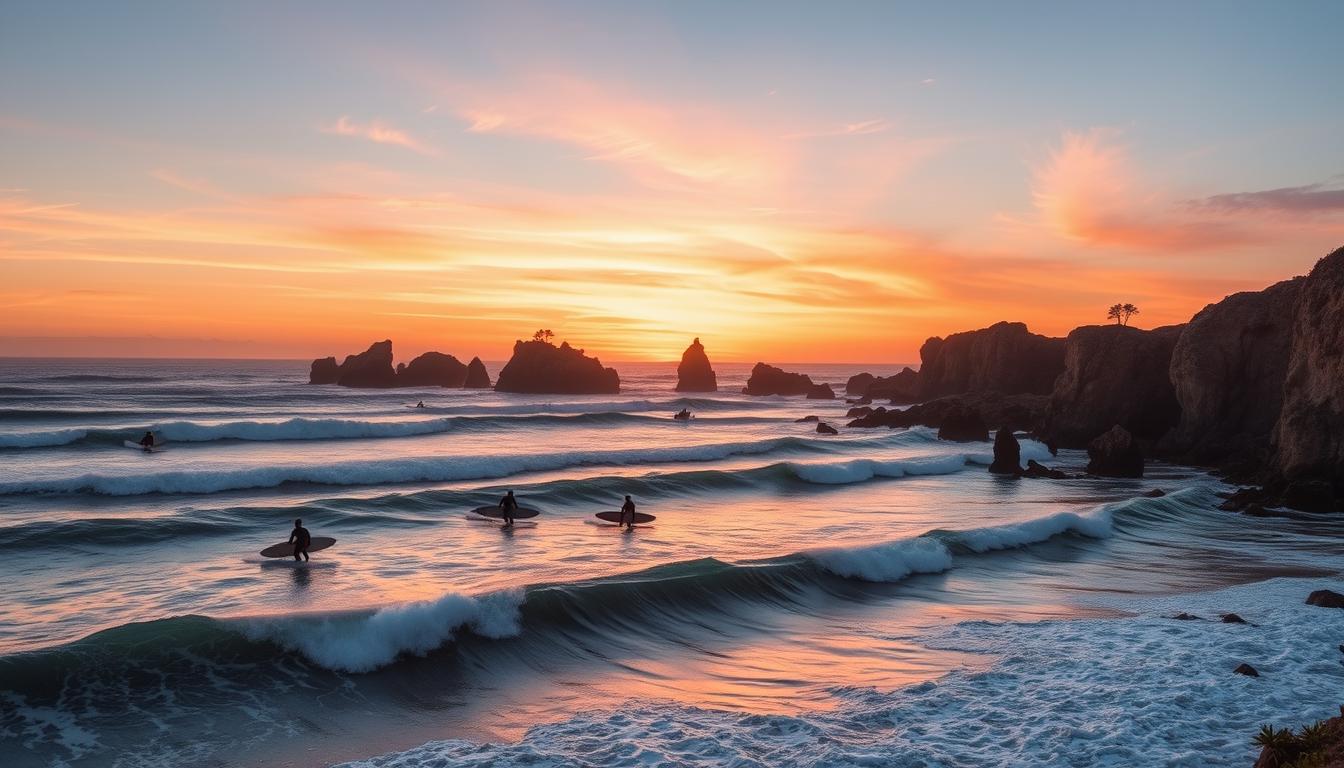
This break sits on Morocco’s southwestern Atlantic coast, about 7 km south of Taghazout village and just north of Tamraght. It takes its name from the dark volcanic outcrop at the northern end — a formation locals say resembles a devil’s horn against the sunset.
The spot lies within the broader Taghazout Bay region, a 23-kilometer stretch that’s become one of Africa’s premier surf destinations. From Agadir, it’s roughly 20 minutes north. From Marrakesh, about 3 hours by car.
What makes this location special is its position at the mouth of a wide, sandy bay. The beach curves between the rocky headland and the dunes of Banana Beach to the south. This geography captures northwest Atlantic groundswells while offering wind protection — producing consistently surfable waves even when nearby spots are blown out.
Getting There:
- From Agadir Airport (~23 km): Pre-booked transfer (€25–€35), grand taxi (€15–€20), or rental car (€20–€40/day)
- From Marrakesh (~240 km): Private transfer (€80–€120), shared surf camp shuttle, or rental car
- From Essaouira (~170 km): Rental car or bus to Agadir, then taxi north
Guide to Devil’s Rock: Why This Wave is Famous
This break may not have Anchor Point’s global fame, but within Morocco’s surf community, it’s arguably the most important spot in the region. While Taghazout is famous for heavy point breaks, those waves are strictly for intermediates and advanced surfers. This beach break fills the crucial gap — beginners take their first green waves here, intermediates refine their turns, and advanced surfers enjoy relaxed sessions when the points are too crowded.
Unlike the reef breaks dominating the area, this wave breaks over a predominantly sand bottom. When you wipe out, you fall onto soft sand rather than razor-sharp volcanic rock or sea urchins. For surf schools and nervous beginners, this is a game-changer.
This is also where the surf community comes together. On any morning, you’ll find local Moroccan groms sharing waves with European tourists, instructors coaching beginners, and experienced chargers warming up before heading to Anchor Point. The vibe is famously friendly and inclusive. The Imourane Surf Club, based right here, runs local competitions that draw surfers from across Morocco and beyond.
Guide to Devil’s Rock: Wave Breakdown
To surf this break well, you need to understand how the wave works. This is a beach break, meaning waves break over a sandy seabed. However, the rocky headland at the northern end heavily influences behavior. Northwest swells wrap around the headland and refract into the bay, creating wedging peaks that break both left and right.
The rock creates a natural rip current on the north side that helps experienced surfers get out quickly — though beginners should avoid getting swept toward the rocks. The wave breaks in separate peaks across the beach, so you can usually find a less crowded section by moving down the beach.
While predominantly a right-hand break, the beach break nature means you’ll also find left-hand waves and occasional A-frames on bigger swells. Right-handers peel off the northern rocks toward the center, offering the longest rides. Left-handers break toward the south — shorter but punchy, great for goofy-footers.
A typical wave here has three sections: (1) The Take-Off Zone — mellow and rolling, especially at mid tide; (2) The Face — a workable wall inviting turns and cutbacks; (3) The Inside — gentle whitewater to the sand, perfect for beginners practicing pop-ups.
Guide to Devil’s Rock: Best Conditions
This is one of Morocco’s most versatile waves, but it has a sweet spot.
| Condition | Ideal Range |
|---|---|
| Swell Direction | Northwest (NW) |
| Swell Size | 3–6 feet |
| Swell Period | 10–14 seconds |
| Wind | Light E/NE offshore |
| Tide | Mid tide |
This break truly comes alive when a solid northwest groundswell combines with easterly offshore winds. The wave can produce surprisingly hollow sections and fast, rippable walls. The beach break handles more size than expected — it’s been known to hold well overhead on big winter days.
During summer (June–August), the North Atlantic swell machine goes quiet. However, unlike reef breaks that need significant swell to start breaking, the beach break still produces fun, rideable waves on small days — making it one of the most consistent spots during the off-season.
For the perfect session, look for: swell 4–5 feet at 12 seconds from 300–320° (NW), wind 5–10 knots from the east, rising mid tide, early morning before the wind turns. Check Surfline, Magicseaweed, and Windy — but nothing beats asking locals at your surf camp or the Imourane Surf Club.
Guide to Devil’s Rock: When to Surf
Timing your trip depends on your skill level and what experience you want.
Winter Peak Season (November–March)
This is when the break comes alive. Strong North Atlantic storms send consistent northwest swells, producing waves from fun-sized to seriously heavy. Wave size: 4–10+ feet. Best for intermediate and advanced surfers. Crowds are moderate to heavy. December through February can see 6–12 feet across the region.
Shoulder Seasons (March–May & September–October)
For many surfers, this is the perfect balance. Swell is still consistent and solid, but crowds thin out, prices drop, and the weather is more pleasant. Wave size: 3–6 feet. Best for beginners and intermediates — the ideal learning window.
Summer Low Season (June–August)
Smaller waves, stronger onshore winds, and a completely different vibe. Wave size: 1–3 feet. Best for total beginners, longboarders, and those prioritizing warm weather over wave quality.
Guide to Devil’s Rock: Water Temperature
You’ll need a wetsuit year-round here. Even in summer, the Atlantic stays cool thanks to the Canary Current.
| Month | Water Temp | Wetsuit |
|---|---|---|
| Jan–Feb | 16–17°C / 61–63°F | 4/3mm + booties |
| Mar–Apr | 16–19°C / 61–66°F | 4/3mm or 3/2mm |
| May–Jun | 18–21°C / 64–70°F | 3/2mm full suit |
| Jul–Aug | 21–23°C / 70–73°F | Shorty or boardies |
| Sep–Oct | 20–22°C / 68–72°F | 3/2mm full suit |
| Nov–Dec | 17–18°C / 63–64°F | 4/3mm + booties |
Guide to Devil’s Rock: Boards & Gear
This break’s versatility extends to equipment. The wave works on almost everything.
For Beginners: Foam boards (7’0″–8’6″) are the go-to for surf schools — stable, buoyant, and forgiving. Mini-mals/funboards (7’2″–8’0″) are good progression boards.
For Intermediates: Hybrid shortboards (6’4″–6’10”) are the sweet spot for typical 3–5 foot days. Fish boards (5’8″–6’2″) excel on smaller summer days.
For Advanced: Performance shortboards (6’0″–6’4″) come alive on bigger winter swells. Longboards (9’0″+) are perfect for small summer days or high-tide sessions.
Most surf camps and shops in Taghazout and Tamraght offer full quivers for rent at €8–€15 per day for board and wetsuit.
Guide to Devil’s Rock: Surf Schools & Accommodation
One reason this break is so beginner-friendly is the abundance of quality instruction and places to stay.
Surf Schools
- Imourane Surf Club — Located right at the break, the most local option. They run programs for local Moroccan kids and visiting surfers.
- Surf Berbere — Based at nearby Hash Point but regularly brings groups here. One of the most established camps in the region.
- Taghazout Waves Surf Camp — Located in Tamraght with easy access, offering comprehensive packages including accommodation, meals, lessons, and daily transport.
Lessons typically run 2.5–3 hours with 4–8 students per instructor, including equipment, at €25–€40 per lesson. Multi-day packages offer better value and faster progression.
Where to Stay
- Budget (€15–€30/night): Surf hostels with dorm rooms, communal meals, and instant surf buddies. Camping at the Atlantic campsite (€5–€10/night) is popular with van-lifers.
- Mid-Range (€40–€80/night): Surf hotels and guesthouses with private rooms, often including breakfast and surf transport. Apartments and Airbnbs in Tamraght and Aourir suit groups or longer stays.
- Luxury (€100–€400+/night): Boutique hotels and riads like The Lunar Surf House offer pools, yoga, and gourmet meals. Villa rentals with private pools and dedicated surf guides suit groups.
Guide to Devil’s Rock: Dining & Safety
Dining
- Brahim’s Fish Restaurant — Right at the beach, the most famous surfside eatery in the region. Fresh-caught fish, healthy salads, and legendary fish kebabs with crispy chips. The terrace overlooks the waves. Must-try: the fish tagine.
- Surf Camp Meals — Most camps include half-board or full-board with fresh bread, olive oil, eggs, and mint tea for breakfast; packed lunches or beachside BBQ; tagines, couscous, and grilled meats for dinner.
- Taghazout Village — A 10-minute drive north with cafés serving strong Moroccan coffee and fresh juices, plus local eateries with authentic tagines.
Safety & Etiquette
- Rip Currents: The headland creates a permanent rip on the northern side — beginners should avoid surfing too close to the rocks. If caught, paddle parallel to the beach until you’re out.
- Rocks at Low Tide: Rocks are exposed near the headland at low tide. Avoid surfing too close, especially on bigger days.
- Sun & Hydration: Moroccan sun is intense year-round, so wear reef-safe sunscreen and bring water.
- Marine Life: Minimal dangerous marine life. Occasional jellyfish may appear, but shark encounters are virtually unheard of.
- Etiquette: Don’t drop in. Don’t snake. Share the peaks. Respect the locals. Give space to surf school lessons. Communicate with a simple “going left!” or “going right!” Experienced locals use the rip near the headland to get out quickly — don’t get in their way. The inside whitewater and the southern end are understood as beginner areas.
Guide to Devil’s Rock: FAQs
Is this break good for beginners?
Yes — one of the best beginner spots in Morocco. Sandy bottom, gentle whitewater, and rolling take-offs create an ideal learning environment.
How big do the waves get?
Typically 2–6 feet, but can reach 8+ feet on big winter swells.
What’s the best month to surf?
Beginners: March–May or September–October. Intermediate/advanced: November–March. Warm water/small waves: June–August.
Do I need a wetsuit?
Yes, year-round. 4/3mm for winter, 3/2mm or shorty for summer.
Is it crowded?
Moderately crowded during surf camp hours (9–11 AM, 3–5 PM), but the wide beach has multiple peaks.
Can you surf at high tide?
Yes, but the wave fattens out. Ideal for total beginners at high tide; mid tide offers the best shape.
Is it dangerous?
One of the safest waves in Taghazout. Sandy bottom means no reef cuts. Main hazards: rocks near the headland at low tide and occasional rip currents.
How do I get there from Taghazout?
About 7 km south. Drive (10 min), taxi (€3–€5), walk the coastal path (90 min), or join a surf camp with transport.
Guide to Devil’s Rock: Conclusion
This break is more than a surf spot — it’s the heart of the Taghazout surf experience. In a region famous for intimidating reef breaks, this wave offers something increasingly rare: a beautiful, accessible, genuinely fun break that welcomes everyone from first-timers to seasoned chargers.
Whether you’re catching your first green wave in warm Moroccan morning light or watching the sunset paint the Anti-Atlas Mountains gold from the sand, this spot delivers moments that stay with you long after your wetsuit dries.
So pack your board — or don’t, because the rentals are excellent. Book that flight to Agadir. And come find out why, despite its devilish name, this little corner of the Moroccan Atlantic feels like heaven on Earth.
This guide to Devil’s Rock was written for surfers, by surfers. All recommendations are based on firsthand experience and up-to-date research. Wave conditions change daily — always check the forecast and surf within your abilities.