
Surfer Secrets of Crocro Beach: good Wave
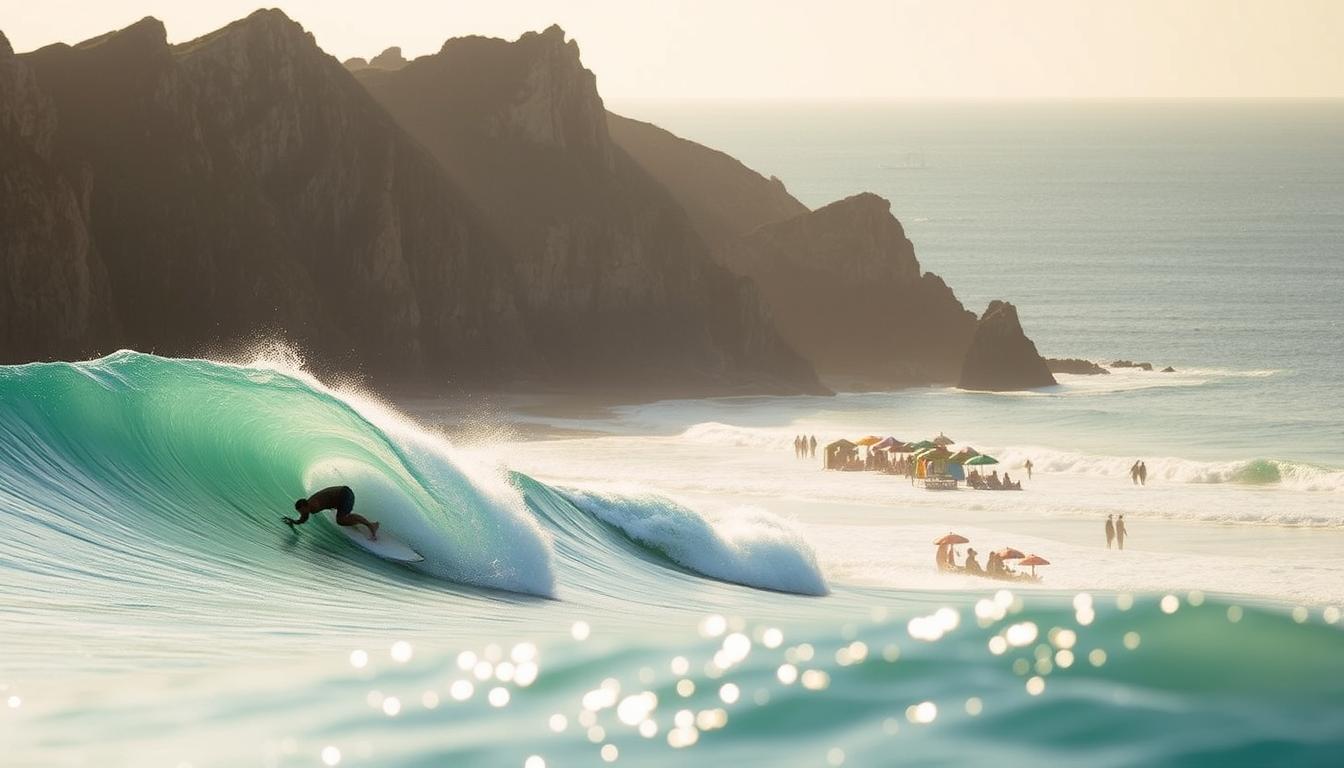
Imagine standing on the golden sands of Crocro Beach. The Atlantic’s waves call out to surfers from everywhere. Your heart beats fast as you get ready to ride the perfect wave in this Moroccan paradise. Welcome to the Surfer Secrets of Crocro Beach: a guide to navigating its waves.
Crocro Beach, near Tamraght, is a top spot for surfers of all levels. It’s perfect for beginners learning to balance and for pros looking for tough waves. Catching the perfect wave here is more than just skill. It’s about knowing the special qualities of these surf spots. Discover the Surfer Secrets of Crocro Beach: to elevate your surfing experience.
Surf fans will see why Crocro Beach is a secret treasure in Morocco’s surfing world. With frequent waves and a friendly surf community, you’ll make memories that last a lifetime. Uncover the Surfer Secrets of Crocro Beach: to enhance your adventure.
Table of Contents
Crocro Beach is a special place for surfers, with waves that move in complex ways. Forecasting these waves is like an art. It’s where nature’s beat makes surfing conditions perfect.
For those looking for the best waves, Crocro Beach is both exciting and tough. Its location means waves change all year, offering something new every time.
By understanding the Surfer Secrets of Crocro Beach, surfers can maximize their enjoyment and skill development.
Seasonal Wave Transformations
Knowing when to surf is key. The waves at Crocro Beach change with the seasons:
- September to April: Best surfing with steady swells
- Winter: Bigger waves for the pros
- Summer: Smaller waves for beginners
Atlantic Swell Dynamics
The Atlantic Ocean shapes Crocro Beach’s waves. Swells from far away come to the shore, making surfing great.
Wind Patterns and Wave Quality
Wind affects the waves a lot. Offshore winds make waves clean. Onshore winds mess them up. Surfers learn to predict this to catch the best waves.
Mastering wave forecasting at Crocro Beach is about understanding nature’s intricate dance between wind, water, and terrain.
Essential Gear for Conquering Crocro’s Waves
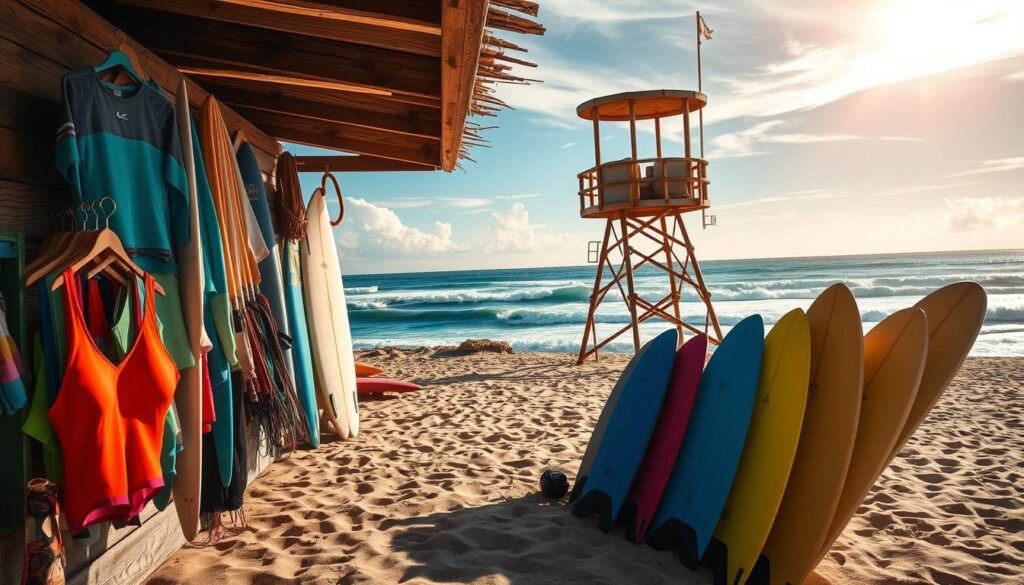
Getting ready for surfing at Crocro Beach means picking the right gear. Your surfboard and safety gear can make your trip better. Knowing what to choose helps you surf better and stay comfy in the ocean.
Wetsuit Strategies for Seasonal Surfing
At Crocro Beach, the water temperature changes with the seasons. In winter, a 4/3mm wetsuit keeps you warm. For summer, a 2mm shorty or 3/2mm wetsuit is better.
- Winter (16-18°C): 4/3mm full wetsuit
- Summer (warmer waters): 2mm shorty or 3/2mm wetsuit
- Consider neoprene thickness for optimal thermal protection
Surfboard Selection for Wave Conditions
Choosing the right surfboard is key to a good surf session at Crocro. Different boards work best in different waves. Knowing the local waves helps you pick the right one.
| Wave Condition | Recommended Board | Skill Level |
|---|---|---|
| Small, Gentle Waves | Longboard | Beginner |
| Medium Waves | Funboard | Intermediate |
| Large, Challenging Waves | Shortboard | Advanced |
Safety Equipment Essentials
Your safety is most important when surfing. Good safety gear keeps you safe and makes surfing better at Crocro Beach.
- Surf leash (prevents board separation)
- High-SPF waterproof sunscreen
- Rash guard for skin protection
- Surf wax for board grip
- Waterproof first aid kit
Pro tip: Always check local surf conditions and gear recommendations before your beach vacation to ensure you’re fully prepared for Crocro’s unique wave environment.
Surfer Secrets of Crocro Beach: Finding the Perfect Wave
Finding the perfect wave at Crocro Beach is not just luck. It’s about understanding the beach and using smart surfing tips. This way, you can make the most of your time in the water.
When searching for the perfect wave, keep these points in mind:
- Analyze local wind patterns
- Check tide schedules
- Observe wave formations
- Use online forecasting tools
Wave forecasting is all about reading the ocean’s signs. Experienced surfers know timing is key. Look for these signs of a great wave:
- Consistent swell direction
- Clean, organized wave sets
- Minimal wind interference
- Smooth water surface
Pro tip: Local knowledge is your best resource. Talk to seasoned surfers who know Crocro Beach’s waves well. They offer insights that online tools can’t match.
Different skill levels need different waves. Beginners should look for gentle beach breaks. Advanced surfers can tackle more complex waves. Knowing your skill level helps choose the right wave.
“The ocean speaks to those who listen carefully” – Local Surf Instructor
Finding the perfect wave is an art that mixes technical skills, patience, and intuition. By practicing, observing, and learning, you can master Crocro Beach’s waves.
Best Times to Surf at Crocro Beach
Finding the right time to surf at Crocro Beach is all about knowing the coastal rhythms. Surf spots here need careful planning to catch the best waves.
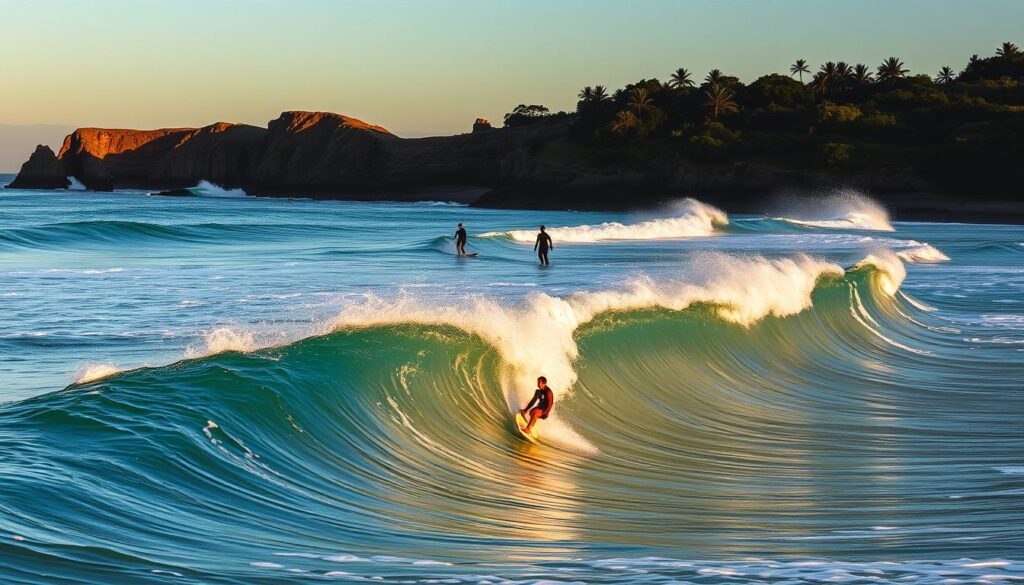
Timing and local weather patterns are key to a great surfing experience. This area offers special chances for wave lovers to have unforgettable adventures.
Peak Season Timing
The best time to surf is from September to April. Each month has its own unique wave conditions:
- September-November: Moderate swells, ideal for intermediate surfers
- December-February: Largest waves, perfect for experienced riders
- March-April: Transitional period with consistent wave conditions
Daily Tidal Considerations
Tidal movements greatly affect wave quality. Knowing these patterns helps pick the best surf times:
| Tide Level | Wave Characteristics | Recommended Skill Level |
|---|---|---|
| Low Tide | Faster, more technical waves | Advanced surfers |
| High Tide | Gentler, more predictable waves | Beginners and intermediates |
Weather Pattern Analysis
Good wave forecasting needs watching the weather closely. Wind direction, atmospheric pressure, and swell periods are all important.
Local weather data is key. Use your phone apps and surf reports for the latest on waves.
Navigating Crocro Beach’s Different Surf Zones
Surfing at Crocro Beach is an exciting adventure. It offers multiple surf spots for all skill levels. Knowing each zone’s unique features can greatly enhance your surfing experience.
The beach has three surf zones, each with its own challenges:
- Beginner’s Bay: A gentle beach break with soft, rolling waves perfect for newcomers learning basic surfing techniques
- Intermediate Point: Moderate wave conditions that challenge developing surfers
- Advanced Rock Zone: Powerful waves that test experienced riders’ skills
Exploring these surf spots requires attention to several key factors:
- Wave height and consistency
- Underwater terrain
- Current strength
- Wind direction
Choosing the right surf zone depends on your skill level and comfort in the water. Beginners should start in the protected areas with smaller waves. Advanced surfers can seek out more challenging breaks that demand precise surfing techniques.
Safety is crucial when navigating different surf zones. Always check conditions before paddling out. Respect local guidelines and know your personal skill limits.
Advanced Techniques for Experienced Surfers
Experienced surfers in Morocco’s surfing paradise will find amazing opportunities to improve their skills. The waves near Taghazout are top-notch, perfect for those looking to take their surfing to the next level. Spots like Anchor Point and Killer Point offer incredible right-hand point breaks.
Finding the perfect wave is all about knowing the local wave formations. Morocco’s 1,835-kilometer coastline offers a variety of surfing conditions. From September to April, waves can hit 4 to 5 meters high, offering great chances for advanced moves.
Surfing here requires special skills due to the unique coastal environment. Surf schools in Taghazout focus on small groups, giving personalized lessons for advanced techniques. Surfers can learn complex moves like bottom turns, aerial tricks, and barrel riding.
Getting ready is key for experienced surfers. Knowing the local winds, managing currents, and choosing the right gear are essential. With over 300 sunny days a year and waves up to 500 meters long, Morocco is a top spot for surfers.