
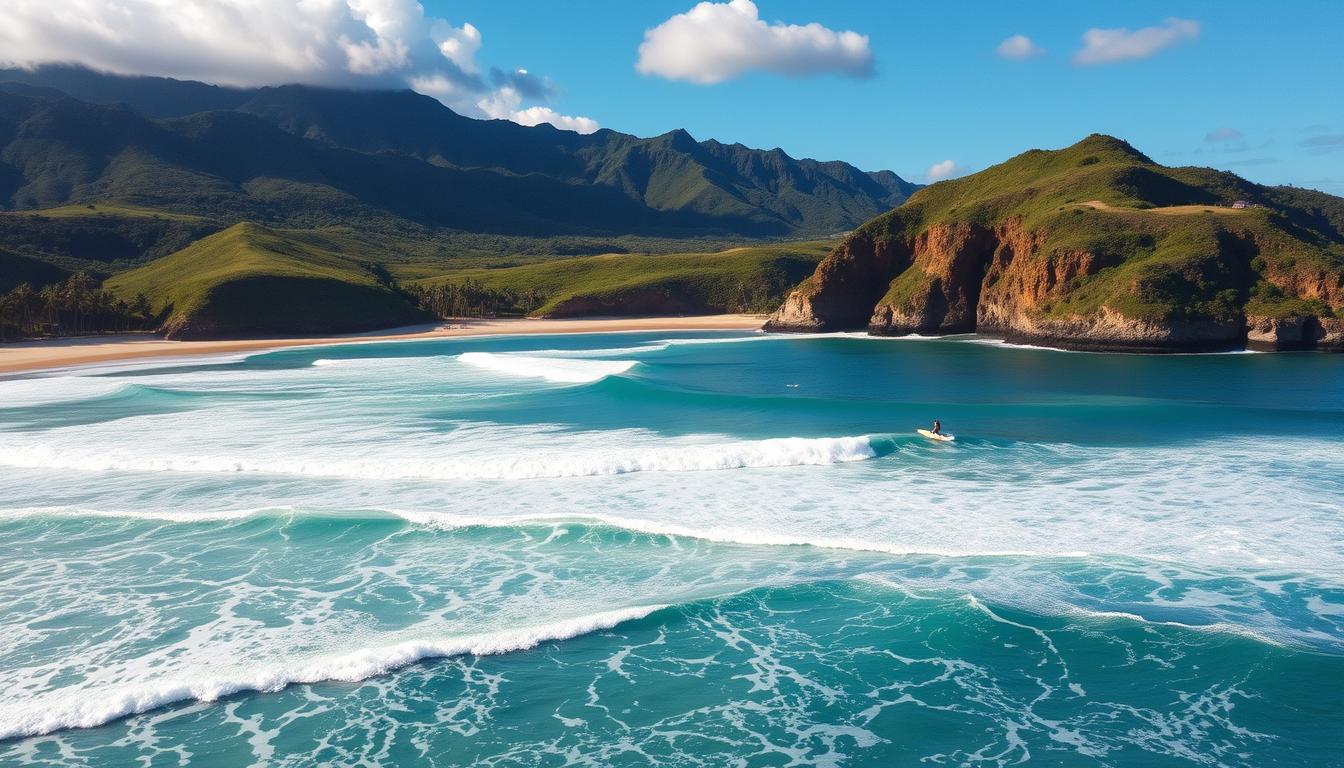
Top Surf Breaks Around the World to Explore
Table of Contents
Imagine a young surfer on a cliff in Baja, California. They watch winter swells roll in with amazing precision. This moment shows the passion for surf exploration.
Surfing has grown from a small sport to a global phenomenon. About 20% of surfers are in popular places like California, Australia, and Brazil. But, 80% of the world’s coastlines are waiting to be explored.
Surf breaks are diverse and beautiful. Places like Nicoya’s empty beaches and Mozambique’s warm waters offer unique experiences. Whether you’re new or experienced, top surf spots worldwide promise fun, challenge, and a connection with nature.
With surf camps growing and technology for tracking waves, finding new spots is easier than ever. Reviews and analytics help pick the best place for an unforgettable surfing trip.
This guide will take you on a journey to the world’s most amazing surf breaks. Get ready to find waves that will change how you see this incredible sport.
Understanding World-Class Surf Breaks and Their Appeal
Surfing is more than a sport; it connects deeply with the ocean’s power and beauty. Each surf break has its own story, inviting you to discover its unique traits and challenges.
Exploring famous surf breaks worldwide requires knowing about different wave types. Surfing guides help you understand four main categories that shape the surfing experience:
- Beach breaks
- Reef breaks
- Point breaks
- River breaks
What Makes a Perfect Surf Break
A top surf break isn’t just about wave size. It’s about consistency, shape, and the location’s unique character. Surf break locations like Trestles in California and Supertubos in Portugal show how different places offer unique surfing experiences.
| Break Type | Characteristics | Skill Level |
|---|---|---|
| Beach Breaks | Variable wave types, sandy bottom | Beginner to Advanced |
| Reef Breaks | Consistent, powerful waves | Intermediate to Expert |
| Point Breaks | Long, predictable waves | All Skill Levels |
Best Seasons for Different Locations
Timing is key in surfing. Places like J-Bay in South Africa or Pipeline in Hawaii have the best seasons for epic waves. Knowing local swell patterns helps make your surfing trip unforgettable.
Safety Considerations for Various Breaks
It’s crucial to understand local conditions, hazards, and your skill level. Always check wave size, current strength, and underwater terrain before heading out.
Famous Surf Breaks Around the Globe: From Pipeline to J-Bay
Exploring surf breaks around the world shows us amazing places for surfing. From Pipeline in Hawaii to Jeffreys Bay, each spot offers a special experience. These places attract surfers from everywhere.
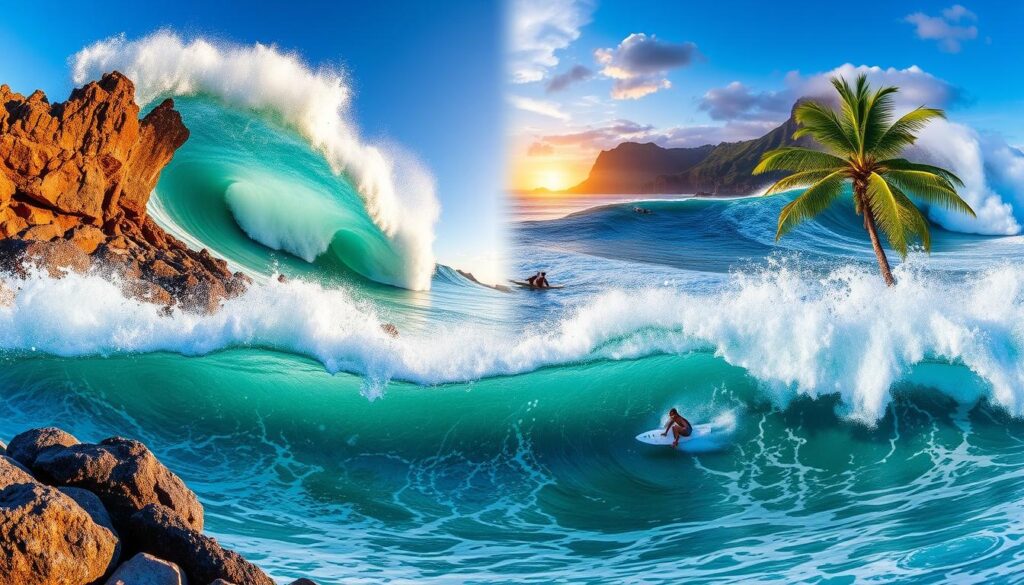
- Pipeline, Hawaii: It’s a top spot for pro surfers. The pipeline powerful waves that break over a shallow reef. It’s a test of skill and bravery.
- Jeffreys Bay, South Africa: Known as J-Bay, it’s famous for Supertubes. This right-hand point break has some of the longest, perfect waves.
- Uluwatu, Bali: It’s great for those who are intermediate to advanced. Uluwatu has long, peeling left-hand waves for an unforgettable ride.
“The ocean is a classroom, and every wave is a lesson.” – Unknown Surfer
For beginners, here are some easier spots:
- Malibu, California: It has gentle waves and consistent conditions.
- Gold Coast, Australia: Offers surfing all year with waves that are not too big.
- Ericeira, Portugal: It’s Europe’s first World Surfing Reserve. It has many spots that are good for beginners.
Whether you’re an expert or just starting these surf breaks are an adventure. Each place has its vibe, challenging waves, and stunning views. They make your surfing trip unforgettable.
Conclusion
Your surfing adventure is more than just catching waves. It’s about exploring the world’s most incredible surf breaks. From the powerful barrels of Teahupo’o in Tahiti to the machine-made perfection at Kelly Slater Wave Company in California, each location offers a unique experience.
The global surf community keeps growing. Thanks to technological innovations like artificial wave pools, surfers have never had it better. Top surf breaks around the world are not just places. They are cultural experiences that connect riders through a shared passion for ocean dynamics and wave riding.
International Surfing Day celebrates this incredible sport. It reminds us that surf breaks are more than destinations. They are gateways to adventure, personal growth, and environmental awareness. Whether you’re drawn to the legendary right-hand point break at Jeffreys Bay or the challenging waves of Shipstern Bluff in Tasmania, each surf break has a story waiting for you.
As you plan your next surfing expedition, remember that the world’s surf breaks offer something for everyone. From beginner-friendly beach breaks to extreme reef challenges, your surfing journey is limited only by your imagination and courage. Embrace the waves, respect the ocean, and continue exploring the incredible surf breaks our planet has to offer.